The Whisper in the Valley
Note: This post is part of my late 2026 Leadership from Within Rhythm series:
Relational Rhythms

Why authentic leadership calling is formed through desolation, not dramatic moments
Consolation and Desolation
In their book, When God Seems Distant, Kyle Strobel and John Coe draw on the ancient Christian description to describe two spiritual seasons: consolation (moments of divine pleasure and excitement) and desolation (seasons of dryness in which the truth about ourselves emerges).
Both can form us. Most of us chase consolation and resist desolation, but desolation often exposes the character work we’d rather avoid. I’m learning to receive those seasons as invitations to deeper formation and clearer awareness of God’s purpose.
Through life’s journey, consolation fades. In its place, the Lord offers us the gift of desolation. Desolation is the place where the Lord allows for pleasure and excitement to wane. Strobel and Coe write, “What is hidden in the recesses emerges. The truth of our character, and the pains and sinfulness we have internalized, come forth as we are being called into a deeper kind of formation.”
I don’t like desolation. I enjoy seasons of God’s pleasure and excitement. I am learning to embrace the seasons of desolation as opportunities to refine my character and deepen my awareness of God’s purpose for my life.
The Dangerous Myth of Dramatic Calling
We're addicted to the extraordinary and to pleasure, restlessly pursuing grand adventures and emotional highs to reveal our purpose. This addiction has infected how we think about calling—we wait for the retreat, conference, or crisis that finally provides clarity. But decisions made during emotional spikes consistently fail to account for long-term consequences.
Our mountaintop experiences may generate and clarify desire. Our sense of calling still needs to be tested in ordinary life.
The Prophets of Baal
King Ahab and Queen Jezebel of the Northern Kingdom of Israel had long refused to follow the God of the Jews. In a public confrontation on Mount Carmel, Elijah challenged 450 prophets of Baal to prove whose God was real. Elijah proposed a test: both sides would prepare a sacrifice, and the true God would be the one who answered with fire.
After the Baal prophets’ frantic prayers failed, Elijah prayed once, and fire came from heaven, consuming the sacrifice and altar (1 Kings 17-19).
It was the ultimate leadership moment, dramatic, undeniable, and filled with consolation. Yet Jezebel’s threat sent Elijah running into the wilderness. He collapsed under a shrub and asked God to take this life. The victory had been real, but it hadn’t made him immune to fear, exhaustion, or despair.
Ultimately, Elijah needed direction for his own life; God didn't speak through windstorms, earthquakes, or fire (consolation). God spoke in a whisper so gentle (desolation) that Elijah almost missed it (see 1 Kings 19).
After more than two decades in Christian leadership, I've found that authentic spiritual leadership is formed less by dramatic moments than by the daily disciplines of staying present in desolation.
The Heat That Reveals Who You Really Are
A crucible is the container in which heat and pressure transform raw materials—gold must be heated to 1,948°F to separate impurities. The crucible pot must withstand the heat required to melt the gold, allowing the impurities to rise to the surface and be scraped away by the smelter.
Rich, an executive director, faced a bitter conflict between junior leaders. Rather than firing them or escaping to a ‘better opportunity,’ Rich stayed present. He chose to stay in the crucible with the leaders.
Six months of difficult one-on-ones and careful listening resolved the conflict. What seemed like his worst season became the foundation for his mediation consultancy. Rich discovered his calling not through a mountaintop moment, but through sustained, daily presence in the hard work.
The Three Stages of Transformation
Drawing on ancient Christian spiritual formation traditions and contemporary research, I’ve identified three stages leaders typically move through as they discover their calling through ordinary faithfulness. Understanding these stages helps you recognize where you are and what's required to move forward.
Stage 1: Confrontation—Breaking Through the False Self
An essential first step in discovering leadership purpose is breaking through our ego, often through a severe test that helps us move from self-reliance to reliance on something beyond ourselves.
In this desolation stage, there's a fierce stripping away of the false self—the identity we've constructed based on circumstances, other people’s opinions, and cultural expectations.
I worked with a domineering leader who received brutally honest feedback. He chose to embrace rather than resist the confrontation—stripping away his false self (the leader who needed to dominate) and revealing his authentic self. Confrontation isn't punishment; it's an invitation to become who you're meant to be.
Stage 2: Self-Soothing—Developing Internal Resources
Leaders in the self-soothing stage learn to tolerate discomfort, regulate emotions, and draw on internal resources rather than external relief. They detach from the need for constant validation, from the need to be right, and from the need to control outcomes. This staying present rather than retreating to safe familiarity—it's where leadership becomes sustainable rather than merely survivable.
Stage 3: Trust—Leading from Your True Self
Trust represents an intimate union—a maturing ability to self-reflect and self-soothe, combined with a growing capacity to live in a connected relationship with God and others. Leaders at this stage embody genuine spiritual leadership in line with who God made them to be, without masks, in alignment with their core values, passions, and long-term goals.
When we lead from this place of trust, we spend most of our time operating from our strengths, abilities, and passions. We’ve proactively addressed our weaknesses through God's grace and strength.
Interested in going deeper in your relationship with God?
I have openings for a few people to begin spiritual direction with me. Find out more about spiritual direction and schedule a discernment call using the form below.
Why the Ordinary Matters More Than the Extraordinary
Genuine transformation happens away from the spotlight, in difficult conversations, persistent conflict, and daily decisions that gradually reveal our character and calling.
Practical Disciplines for Discovering Calling in the Ordinary
How do we actually discover our leadership calling through the ordinary rather than waiting for the extraordinary? Here are disciplines that create space for gradual discovery:
Stay Present in Your Crucible
Kyle Strobel and John Coe remind us that when you're in a season of desolation, resist the urge to escape or make dramatic changes. Instead, ask: “What is this season trying to teach me? What capacities am I developing that I didn't know I had? How is this difficulty revealing my true priorities?”
The crucible isn't something to escape—it's where your calling gets forged. Leaders who learn to stay present in difficult situations develop the capacity for stress management and decision-making that serves them for decades.
Seek Honest Feedback Consistently
Don't wait for annual reviews or crisis moments. Create a personal board of advisors—people who know you well and have permission to speak truth into your life. Ask them regularly: “Where do you see me come alive? Where do you see me struggling? What patterns do you notice in how I lead?”
Confrontations that lead to growth rarely come from mountaintop moments. They come from trusted people who care enough to tell you the truth in ordinary conversations.
Establish Regular Reflection Practices
Set aside time weekly, not just when you're in crisis, to reflect on where you experienced energy, where you felt aligned with your values, and where you sensed you were making a meaningful contribution. Keep a journal tracking these patterns over months and years.
Purpose reveals itself through patterns, not single events. The discipline of regular reflection trains you to notice the whispers that the noise of daily life would otherwise drown out.
Embrace the Long Obedience
Eugene Peterson wrote about “a long obedience in the same direction”—the patient, sustained faithfulness that characterizes genuine spiritual formation. Discovering your leadership calling requires the same commitment. Finding your vocation takes time and consistent practice in the ordinary, not a single extraordinary mountaintop moment. It characterizes genuine spiritual formation.
The Whisper You're Missing
Your calling isn’t hiding on a distant mountaintop. It’s being revealed in the ordinary moments of leadership. If you have the patience to listen, the courage to stay in the crucible, and the humility to receive what those seasons teach you, you will find your calling.
When Elijah needed personal guidance about his calling and direction, God didn’t speak through windstorms, earthquakes, or fire. God spoke in a whisper.
The fire from heaven makes a great story. But the whisper changes your life. Consolation is a gift; so is desolation.
What ordinary crucible are you in right now that might be forging your calling? What would change if you stopped waiting for the mountaintop and started paying attention to the whisper in the valley?
I have openings for a few people to begin spiritual direction with me. Find out more about spiritual direction and schedule a call on my spiritual direction page.
My new Spiritual Rhythms Action Guide is available during September. Get your free copy on this page.
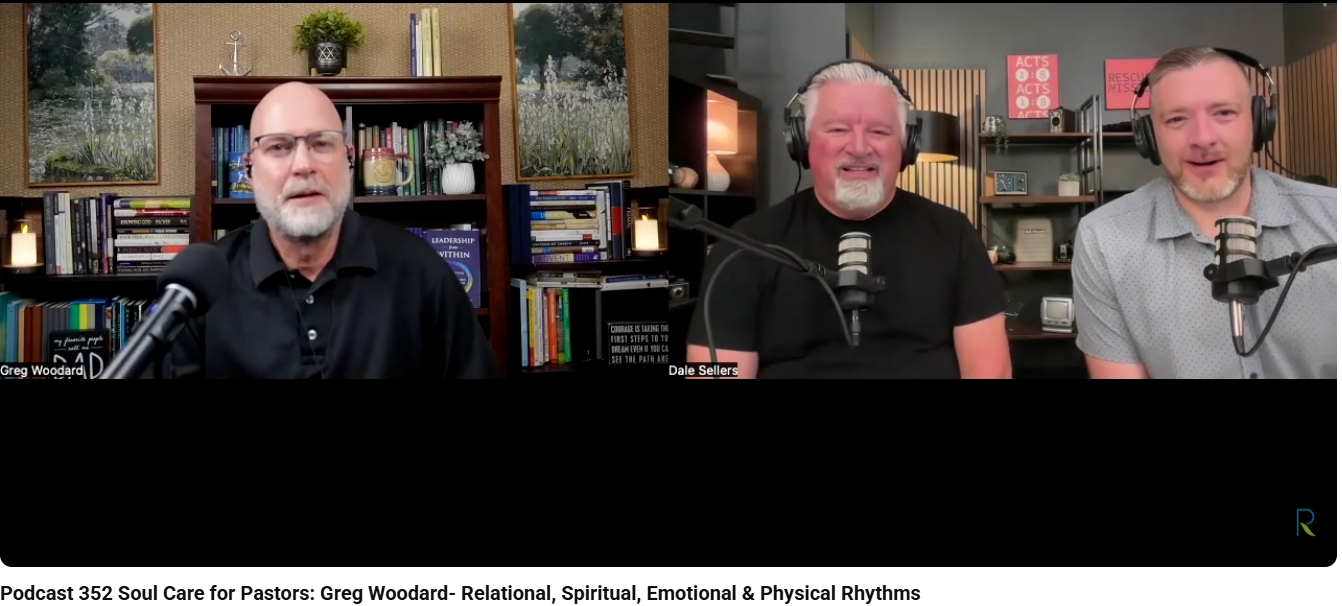
Dale Sellers and Joseph Bennett interviewed me on their The Renewed Pastor Podcast. We talked about pastors’ soul care, framed around the rhythms I write about in my book, Leadership from Within.