
5 Hard-Earned Life Lessons I Wish I'd Known at 20 | How 40 Years of Experience Shaped My Approach to Decisions, Vision, Growth, and Well-Being
It’s been a minute since I posted anything new here on my blog (I just looked - March 17).
On July 10, I turned 60. This occasion has made me more reflective than usual. Turning 60 is a milestone birthday, the beginning of the sixth decade of life. In the months leading up to this day, I have had many moments when I wondered about this decade. I have had similar feelings as I reached the end of past decades of my life. Each one had significant moments.
During my 20s, I served my country as a United States Marine.
Early in my 30s, I married the love of my life, and we had two children. Along the way, I completed seminary.
My father died when I was in my 40s. Not long after he died, I reentered military service - uprooting my family from everything they had known.
In my 50s, I completed my doctorate, helped launch our two children into their adult lives, became a grandfather, retired after twenty-two years of military service, published a book, and completed a graduate certificate in spiritual direction at Denver Seminary (more on this at the end of the post).
On the occasion of entering into my sixth decade, I am going to share five hard-earned lessons I have learned over the last 40 years.
Forty years ago, I was 20. I’ve never been good at receiving advice from those more seasoned than me. I always thought:
I’ve got it figured out. They are too old for me, don’t understand my life, and I can't learn anything from them.
Things are different now - they don’t understand.
They don’t understand how different things are for me than when they were my age.
There is a lot of hubris in those bullet points. I hope you will give this 60-year-old dude a chance to offer reflection and perhaps some wisdom from his life. I have spent close to three decades serving people in both professional and personal capacities. I’ve heard stories, walked with people through life’s struggles, and offered life, leadership, and spiritual advice.
I have learned a few things along my personal and professional journey. If you implement the following life lessons built over the last 40 years, you will accelerate your life. Read on and unlock hard-earned, experienced wisdom.
Life Lesson #1: Make Decisions Slowly
In our fast-paced world, making decisions quickly is the norm. Yet there is great value in taking a step back to make well-considered choices.
Making decisions slowly is not about procrastination but about giving ourselves time for discernment. It allows us to evaluate options, gather information, seek advice, and reflect on our values before committing to a choice.
Laura and Mark
Laura was offered a promotion with a significant pay raise and accepted immediately without considering work-life balance or job satisfaction.
Mark was offered the same promotion but took time to consider the financial benefits, long-term goals, and personal values.
Fast forward to six months later:
Laura finds herself overwhelmed with work demands, sacrificing her personal life for career and financial advancement. She regrets not prayerfully seeking advice and considering the many layers of her decision before accepting the promotion. She is seriously considering leaving the position.
Mark feels fulfilled in his new role because he made an informed decision based on prayerful consideration. He carefully researched and reflected on the job offer, considering factors such as work-life balance, growth opportunities, and personal interests, which led to a career move that brings him fulfillment and satisfaction.
Make Decisions Slowly
People who practice making decisions slowly become more self-aware and confident. They develop the ability to make choices aligned with their values and long-term goals. By taking time for reflection, we avoid impulsive decisions and find fulfillment in our endeavors.
The next time you face an important decision, take a step back, breathe, reach out to a wise mentor, and give yourself the gift of thoughtful consideration. Slow decision-making will make a powerful, positive impact on your life.
But here's the thing: to make decisions slowly and thoughtfully, you need clarity about what truly matters in your life. You can't evaluate your options against your values if you haven't first defined those values. This brings us to the second lesson—and perhaps the most foundational one of all.
Life Lesson #2: Know Your Life Vision
Knowing your life vision shapes your life's course and provides direction, purpose, and fulfillment.
Imagine driving without knowing your destination. You'd waste time and energy on roads leading nowhere.
Joan and John
Joan and John are at similar stages in their lives.
Joan has always had a clear vision of what she wants to achieve. She dreams of becoming an accomplished writer and making a positive impact through her words.
Joan diligently works toward her writing goals every day. She invests time in honing her skills, seeking opportunities to publish her work, and connecting with life-minded individuals in the industry.
Joan can make decisions aligned with her life vision. She knows what truly matters to her and can prioritize accordingly.
John has never taken time to define his life vision. He goes with the flow, saying yes to whatever opportunities come his way.
John constantly jumps from one job to another without real satisfaction or purpose. He feels stuck in an endless cycle of monotony and, as a result, lacks motivation to pursue his passions.
John feels overwhelmed by the multitude of choices available to him because he has not defined what he truly wants out of life.
Your Life Vision
Knowing your life vision:
Is a necessity for personal growth and fulfillment.
Allows you to set meaningful goals that align with your values and aspirations.
Provides clarity amidst uncertainty and helps you navigate life’s challenges with a sense of purpose.
Gives you the motivation and drive to overcome obstacles and remain focused on your path.
Guides you towards meaningful experiences and achievements.
When you know your life vision, you become more confident and develop a sense of inner peace, knowing that every step leads toward your desired destination.
Take time to reflect on what matters to you and define your life vision. You will gain a roadmap to a future filled with joy, satisfaction, and personal growth.
Here's what I've learned: having a clear vision is only half the battle. The world changes. Circumstances shift. New information emerges that challenges your assumptions. If you cling rigidly to your original vision without being willing to learn, adapt, and listen to feedback, you'll find yourself pursuing a destination that no longer serves you. This is why the next lesson matters so much—and why it might be the most transformative of all.
Life Lesson #3: Be Teachable
Being teachable is a trait that profoundly impacts our personal and professional growth. In a constantly changing world, being open to learning and enhancing new ideas is essential for success. This lesson allows us to expand our knowledge, improve our skills, and adapt more readily to change.
Some of my readers know I served as a young enlisted Marine, and then later as a chaplain to Marines. Imagine two young Marines reporting to their first day at a new command.
Marine A approaches her new role in the command with a closed mindset, believing she already knows everything there is to know. She resists feedback and is unwilling to learn from others. Her young career stalls, and she is not promoted.
Marine B embraces having a teachable spirit. He actively seeks guidance and eagerly absorbs new information. Over time, he demonstrates remarkable growth, quickly becomes an invaluable member of the team, is recognized as a leader, and begins to be promoted.
People who aren’t teachable find themselves stuck in their ways or unable to adapt to change. They miss valuable growth opportunities simply because they are unwilling to learn from others.
Those who embrace being teachable experience numerous benefits:
They acquire new knowledge and skills to enhance their personal and professional lives.
They develop stronger relationships by showing humility and creating environments where collaboration thrives.
They overcome obstacles and achieve goals through continuous learning and a willingness to adapt.
A Humble Mindset
People with a teachable mindset become more receptive to new ideas, fostering growth and resilience. True wisdom comes from what we know and from recognizing how much more remains to be learned.
I've learned that being teachable opens the door, but it doesn't walk you through it. A receptive mindset is essential, yes—but it's not enough on its own. You can be open to learning and still coast, still settle, still let opportunities pass by. The fourth lesson is about taking that openness and turning it into action—about deliberately, consistently, and proactively pursuing growth throughout your entire life.
Life Lesson #4: Be a Life-Long Learner
While teachability is the mindset, lifelong learning is the proactive commitment to continuous growth. In our ever-changing world, this commitment is essential for personal development and success.
Individuals who embrace lifelong learning are like a flowing river: open to new ideas, constantly adapting and evolving. Those who resist remain stagnant.
Sarah and Bill
Sarah and Bill approach learning differently.
Sarah is a lifelong learner. She actively seeks opportunities to expand her knowledge through reading, taking courses, participating in workshops, and having conversations with people from many walks of life and professions.
Bill is content with what he already knows; he believes his existing knowledge is sufficient to navigate life.
The result? Sarah’s thirst for knowledge enables her to gain wisdom across different areas of life, from career advancement to personal relationships. She becomes adaptable and resilient as she acquires new skills and stays up to date on industry trends.
Bill finds himself stuck in his comfort zone. His lack of curiosity limits his growth potential. His personal relationships are lackluster, and he has long ago been left behind in his professional life.
Life becomes stagnant for someone like Bill who resists learning opportunities outside his comfort zone. They will struggle to adapt to technological changes or society’s evolving demands.
The Learning Journey
By embracing lifelong learning, individuals open themselves to endless possibilities for personal and professional development. Embrace this role and embark on a journey that will enrich your life.
Here's a trap I've seen countless times: people like Sarah can pour everything into learning, growth, and self-improvement—reading late into the night, taking on new courses, constantly pushing themselves to know more and do more. Without rest, without boundaries, without intentional breaks, that beautiful river of learning becomes a raging flood that drowns you. I've watched brilliant, curious people burn out because they never learned to pause. That's where the fifth lesson comes in—and it might be the most practical one of all.
Life Lesson #5: Build a Life Rhythm
It's easy to lose sight of what truly matters when caught in the chaos of work. Building a considered life rhythm is crucial to our well-being.
Imagine trying to dance without rhythm, or playing a guitar without any sense of meter. Both experiences would be chaotic and unsatisfying.
Elizabeth and Alex
Elizabeth constantly works long hours without adequate breaks, self-care, or soul-care. She becomes exhausted and emotionally drained, struggling to find joy.
Alex has consciously built rhythm into his life through regular breaks, self-care, and spiritual practices. Those who follow Alex's approach experience reduced stress, better relationships, and improved well-being.
Small Changes
By incorporating small changes into our lives at regular intervals (taking breaks throughout the day, scheduling time for hobbies, taking vacations, and taking a spiritual retreat), we can experience mini-transformations. We will feel more energized, be better able to handle life's stresses, and have greater clarity in decision-making.
Building a considered life rhythm is not about achieving perfection, but finding what works best for you. It’s about prioritizing self-care, setting boundaries, and creating sustainable habits that nourish your inner world, body, mind, and soul. You will cultivate joy in your daily routines and live a more fulfilling life.
I wrote more on this fifth lesson in my book, Leadership from Within.
Why am I sharing all of this now? These five lessons aren't abstract concepts I've been pondering in isolation—they are viscerally real to me as I enter my sixth decade. My life has tied them all together. My 60 years do not give me a corner on wisdom, but perhaps, if you take my life lessons, refine and make them your own, you will live into your best life.
Recent Events
On the same day as my birthday, after spending a great deal of time providing one-on-one spiritual direction with a handful of people, I completed my training at Denver Seminary. My journey through the program, with a great group of people, is complete. Below is a picture from our graduation ceremony.
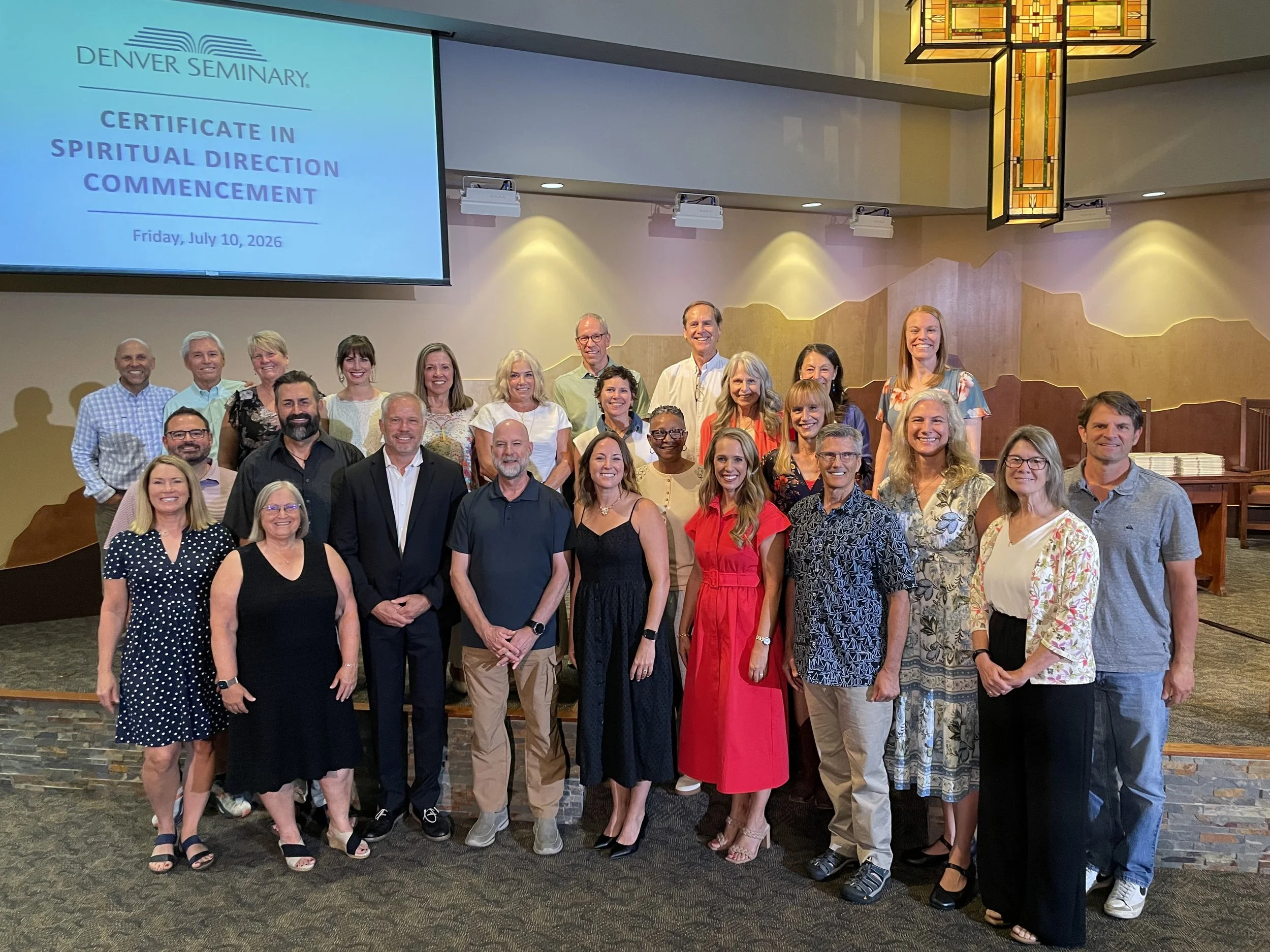
Since you have read this far, the above may have struck a chord. One of the best investments for living into the five life lessons I shared above is to spend time in spiritual direction. I would be honored to walk with you, together experiencing the transformative power of journeying closely with God, listening to his voice, and watching together for the presence and activity of God in your life.
I’d love to discern with you if walking with you as a spiritual companion might be what the Holy Spirit is inviting us toward. You can read more about spiritual direction and schedule a discernment call with me on this page.
Over the next few months, I am sharing action guides corresponding to each part of my book. The first one is available now; the next three will be available in September, October, and November.
