
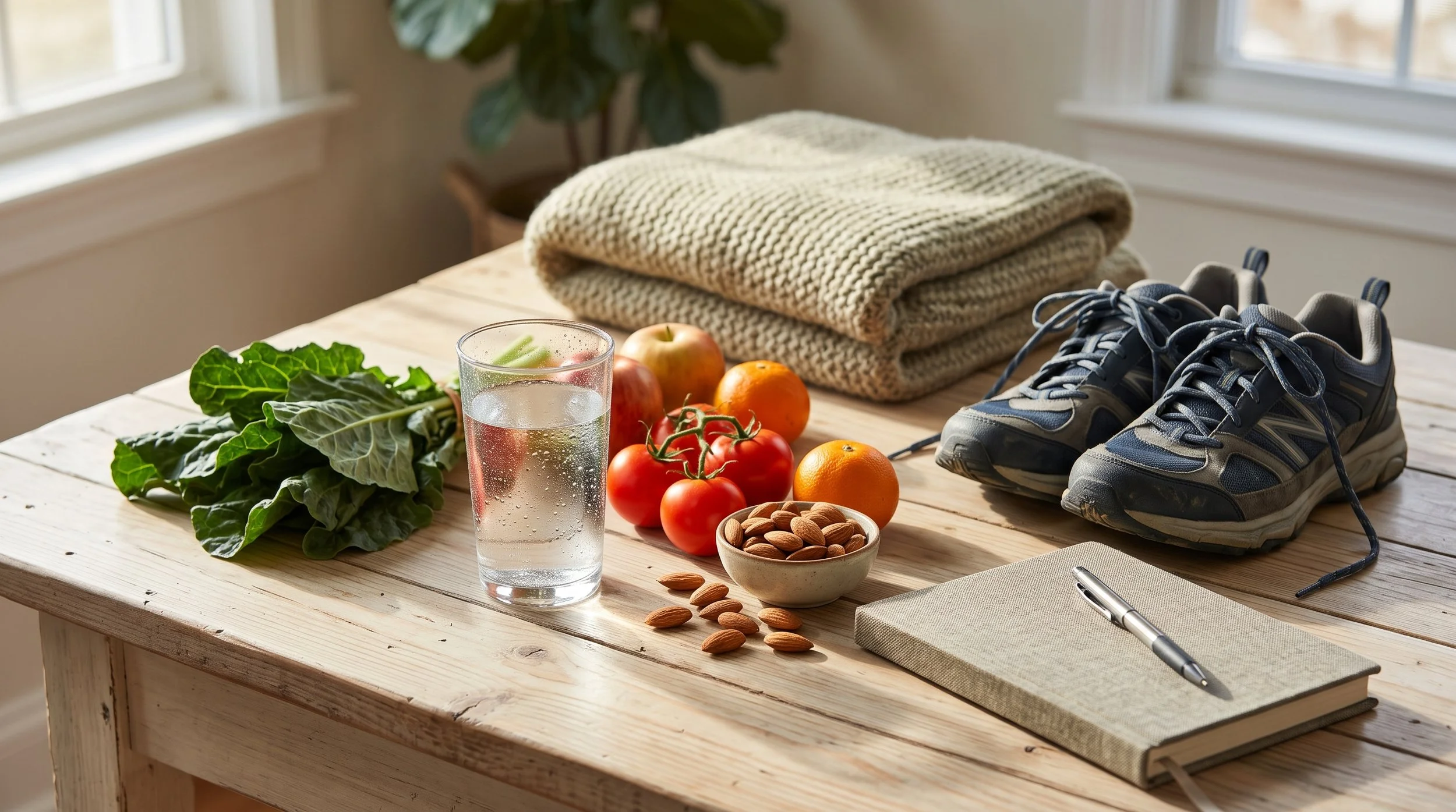
Caring for the Body as an Act of Faith, Discipline, and Service
Note: This post is the seventh article in my late 2026 Leadership from Within Rhythm series:
Relational Rhythms
Leadership Strength Isn’t Independence - It’s Skillful Connection
How Attachment Theory Shapes Your Leadership and Team Culture
Spiritual Rhythms
Emotional Rhythms
My fourth action guide: Physical Rhythms is available here.
Are Spiritual and Physical Life Separate?
Christian spirituality has sometimes treated the body as less important than the spirit. But a healthy theology recognizes that we are integrated beings: physical, emotional, psychological, and spiritual. Caring for the body is therefore part of caring for the whole person.
In her book, From Burned Out to Beloved, Bethany Dearborn Hiser reminded her readers,
We are complex, intertwined beings with our soul, body, mind, and emotions all amazingly interconnected.
We are integrated beings: physical, emotional, psychological, relational, and spiritual. Soul care therefore includes the body, because neglecting our bodily rhythms affects how we live, lead, and serve, and we cannot live our best lives as God’s creatures.
Why Do People Neglect the Body?
We live in a time of unrealistic expectations, sometimes imposed by society and often self-imposed. It is easy to forget that we live with finitude. We may say yes to another church commitment, social engagement, work obligation, or late night while saying no to sleep, exercise, or recovery.
Supporting Physical Well-Being
A documentary about Cedar Point showed how carefully amusement parks maintain complex rides. The lesson applies to our bodies as well: neglect may remain invisible for a while, but eventually it affects the entire system.
Intentionality and discipline are intermingled. Being intentional in soul care practices requires a diligent approach to how we live our lives so each area receives proper attention. Being deliberate creates margin, allowing space for the essential things in our lives.
In coaching, I often remind people that success requires saying no to less important things. That might mean turning off late-night television, declining a non-essential call, or protecting time for exercise and family.
Taking a Nap
During a retreat after a difficult ministry season, my spiritual director gave me unexpected advice: nap before doing anything else. I wanted to use the time productively, but she understood that I first needed to rest. Her advice reversed my usual pattern and reminded me that listening sometimes has to come before accomplishing.
At an early part of her Christian ministry life, Ruth Barton writes about assuming that her fatigue and depression were spiritual problems. A psychologist who was also a spiritual director instead asked about her sleep, food, exercise, hydration, and general health. The experience reminded her that physical neglect can appear in every other area of life.
When we treat the body as part of God’s good creation, stronger physical rhythms can support energy, mood, cognition, and connection with God.
Physical Wellness and Resilience
I began serving as an active duty Navy chaplain in late 2009. In February 2010, I had the first of five seizures I have endured over the last seventeen years. After the first seizure, medical personnel found me fit to continue military service. Fast forward to October and December of 2022, and I had two more seizures and was diagnosed with epilepsy. I retired from active duty in August 2023.
Seizures left me fatigued and uncertain about my future, affecting my emotional, relational, and spiritual life. Each episode reinforced the connection between physical health and overall wellness.
Gary Thomas writes,
Whether you’re in your twenties, thirties, or forties—or facing your fifties, sixties, seventies, or beyond—one thing is certain: you’re doing it in a body, a body that not only contains a soul, but affects your soul as well.
Thomas makes a similar point through a World Vision leader, who warns that neglecting the body can dull spiritual sensitivity and diminish years of ministry.
Ministry isn’t limited to formal religious roles. We all influence and serve the people around us. Caring for our physical self helps us maintain a quality of life and provides the physical resources others need.
Six Physical Rhythms That Support Physical Well-Being
Honoring the body requires intentional physical rhythms. While individual needs vary, I believe there are six foundational physical rhythm elements:
Sleep (7-9 hours): Quality sleep enables physical recovery and mental clarity. Poor sleep impairs decision-making and quality of life.
Nutrition: Whole foods fuel peak performance; processed foods drain energy. Focus on nutrient density over calorie counting.
Movement: Regular cardiovascular exercise and strength training maintain heart health, bone density, and joint mobility. Start where you are.
Body Composition: Maintain a healthy weight range for your body type through sustainable habits, not extreme measures.
Hydration: Drink half your body weight in ounces of water daily. Chronic dehydration reduces energy and impairs the body's ability to eliminate toxins.
Active Rest: Schedule regular breaks from life's demands. Unlike sleep, rest involves a conscious slowdown, such as practicing mindfulness, taking nature walks, or doing deep breathing.
These practices work synergistically: good sleep improves exercise performance, proper nutrition supports quality sleep, and adequate hydration enhances mental clarity and physical recovery.
Listening to Your Body
Listening to our bodies helps us gain clarity in life. Elouise Renich Fraser wrote in her book, Confessions of a Beginning Theologian,
I can’t trust my mind as often as I trust my body. My mind tries to talk me into business as usual, but my body isn’t fooled. Insomnia, intestinal pain, and diarrhea let me know there’s work to be done.
Ruth Barton notes that we should honor our bodies by listening to joy, lightness of being, tension, and wonder, and asking what these may mean. We should ask what these feelings are saying about how we are living out our God-ordained calling and purpose.
How can we listen more to our bodies? Barton offers a brief practice to help us:
Find a spot in your home where you can have silence in the early morning, where you will not be interrupted, and where you can remove distractions.
Offer this prayer: “Lord, I realize that my body is the temple of the Holy Spirit, who lives in me, given by God. The healthy functioning of my body is important to you. Help me now to listen intently to what my body is telling me. Help me to acknowledge what I must do as I hear what it is saying to me so that I may best serve the ministry you have given me. I pray this in unity with Father, Son, and Holy Spirit. Amen.”
After praying, sit quietly and notice your body from head to toe. Notice the tension, discomfort, ease, or energy without judging what you find. Then ask, “What might my body be telling me about the way I’m living?” This kind of awareness can reveal needs that constant activity keeps hidden
Notice your breathing, heart, stomach, and overall physical state. Give attention to tension, discomfort, ease, joy, and wonder without judging what you find. Then ask, “What might my body be telling me about the way I’m living?” Often God speaks into that awareness with truth and insight that proves very helpful over the long haul.”
How Physical Health Shapes Leadership
In this short post, we considered the direct correlation between each rhythm and overall leadership flourishing and effectiveness. Gaps in any area have cascading effects in our personal and professional lives. People around us are impacted for better or worse, partly by whether we are living our best lives.
We are not seeking perfection, but we are striving for greater health in all areas of our lives. The bodies we inhabit are tangible ways to check on our wellness.
Physical wellness affects leadership in several ways. Sleep supports energy and sound judgment, movement can create space for strategic and creative thinking, and a leader’s habits communicate what the organization values. These choices don’t solve every systemic problem, but they can model a healthier way to work.
The physical rhythm you build will, out of necessity, be different from the one I create. Our rhythms must reflect our personality, temperament, life stage, and ongoing demands on our time (among other things).
To be fully alive, fully human, fully the people God created us to be, we have to care for our bodies, discipline them, and make them our servants in our service to God.
Reflection Questions
Below are some questions for you to reflect on. I’d enjoy reading your replies to this post and these questions in the comments.
Where in your life are you regularly overriding your body’s need for sleep, nourishment, movement, or rest?
What might your body be telling you about your current pace, commitments, or direction?
Which physical rhythm needs the most attention right now, and what small step would strengthen it?
How could caring for your physical well-being help you live, lead, and serve more faithfully?
Are you seeking clarity in your faith journey? Are you seeking deeper discernment? Do you long to hear God's voice more clearly in your daily life? Are you seeking a deeper faith formation? You can read more about spiritual direction and schedule a discernment call on my spiritual direction page.
I prayerfully await our call.
